 Hero Honda Bike
 Hero Honda Bike
 Hero Honda Bike
 Hero Honda Bike
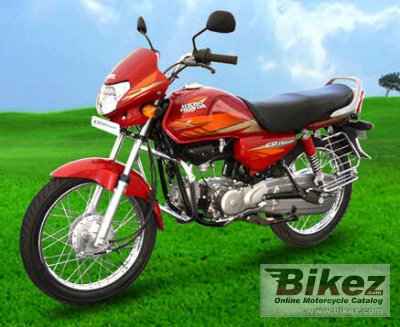 Hero Honda Bike
 Triumph Tiger 800 Running
 Triumph Tiger 800Jumping
 Triumph Tiger 800 Picture
 Triumph Tiger 800 Photo
 Triumph Tiger 800 Yellow
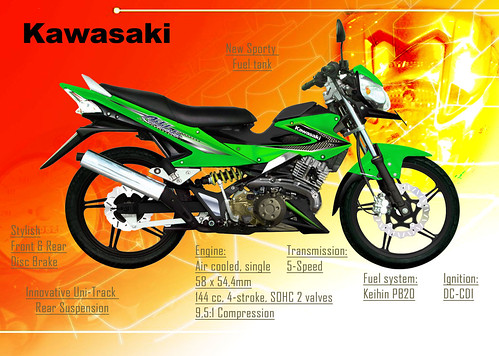 MANILA, Philippines - Whether you’re in for fun, adventure and excitement or you simply want to cruise down the road and enjoy the sceneries around you while riding your motorbike, Kawasaki Motors Philippines Corporation (KMPC) has everything covered for you.

 Kawasaki Fury R Video
 BMW Sport Bikes


 BMW Sport Bikes
BMW entered existence as a business entity following a restructuring of the Rapp Motorenwerke aircraft engine manufacturing firm in 1917. After the end of World War I in 1918, BMW was forced to cease aircraft engine production by the terms of the Versailles Armistice Treaty. company consequently shifted to motorcycle production in 1923 once the restrictions of the treaty started to be lifted, followed by automobiles in 1928–29.
The circular blue and white BMW logo or roundel is portrayed by BMW as the movement of an aircraft propeller, to signify the white blades cutting through the blue sky — an interpretation that BMW adopted for convenience in 1929, twelve years after the roundel was created.[7][8] The emblem evolved from the circular Rapp Motorenwerke company logo, from which the BMW company grew, combined with the blue and white colors of the flag of Bavaria, reversed to produce the BMW roundel. However, the origin of the logo being based on the movement of a propeller is in dispute, according to an article posted in 2010 by the New York Times, quoting "At the BMW Museum in Munich, Anne Schmidt-Possiwal, explained that the blue-and-white company logo did not represent a spinning propeller, but was meant to show the colors of the Free State of Bavaria."
BMW's first significant aircraft engine was the BMW IIIa inline-six liquid-cooled engine of 1918, much preferred for its high-altitude performance. With German rearmament in the 1930s, the company again began producing aircraft engines for the Luftwaffe. Among its successful World War II engine designs were the BMW 132 and BMW 801 air-cooled radial engines, and the pioneering BMW 003 axial-flow turbojet, which powered the tiny, 1944-1945-era jet-powered "emergency fighter", the Heinkel He 162 Spatz. The BMW 003 jet engine was tested in the A-1b version of the world's first jet fighter, the Messerschmitt Me 262, but BMW engines failed on takeoff, a major setback for the jet fighter program until successful testing with Junkers engines.
By the year 1959, the automotive division of BMW was in financial difficulties and a shareholders meeting was held to decide whether to go into liquidation or find a way of carrying on. It was decided to carry on and to try to cash in on the current economy car boom enjoyed so successfully by some of Germany's ex-aircraft manufacturers such as Messerschmitt and Heinkel. The rights to manufacture the Italian Iso Isetta were bought; the tiny cars themselves were to be powered by a modified form of BMW's own motorcycle engine. This was moderately successful and helped the company get back on its feet. The controlling majority shareholder of the BMW Aktiengesellschaft since 1959 is the Quandt family, which owns about 46% of the stock. The rest is in public float.
BMW acquired the Hans Glas company based in Dingolfing, Germany, in 1966. It was reputed that the acquisition was mainly to gain access to Glas' development of the timing belt with an overhead camshaft in automotive applications.[13] Glas vehicles were briefly badged as BMW until the company was fully absorbed.
In 1992, BMW acquired a large stake in California based industrial design studio DesignworksUSA, which they fully acquired in 1995. In 1994, BMW bought the British Rover Group[14] (which at the time consisted of the Rover, Land Rover and MG brands as well as the rights to defunct brands including Austin and Morris), and owned it for six years. By 2000, Rover was making huge losses and BMW decided to sell the combine. The MG and Rover brands were sold to the Phoenix Consortium to form MG Rover, while Land Rover was taken over by Ford. BMW, meanwhile, retained the rights to build the new Mini, which was launched in 2001.
Chief designer Chris Bangle announced his departure from BMW in February 2009, after serving on the design team for nearly seventeen years. He was replaced by Adrian van Hooydonk, Bangle's former right hand man. Bangle was known for his radical designs such as the 2002 7-Series and the 2002 Z4. In July 2007, the production rights for Husqvarna Motorcycles was purchased by BMW for a reported 93 million euros. BMW Motorrad plans to continue operating Husqvarna Motorcycles as a separate enterprise. All development, sales and production activities, as well as the current workforce, have remained in place at its present location at Varese.


